

Student Transportation Services of Waterloo Region: A site rebuilt to get every family to the right bus
Project Background
Student Transportation Services of Waterloo Region (STSWR) oversees student transportation services for the Waterloo Region District School Board and the Waterloo Catholic District School Board, helping thousands of students get to and from school safely each day. Their website serves as a central resource for parents, guardians, school staff, and community members looking for transportation information, policies, maps, and service updates.
After completing a rebrand in 2024, STSWR was ready for a website that better reflected their organization and served their users’ needs. They partnered with Stryve to redesign and rebuild their site with a focus on improving usability, modernizing the experience, and creating a platform that would be easier for visitors to navigate and their internal team to manage and maintain.
The Mission
STSWR’s existing website had become difficult to navigate and maintain as content had accumulated across pages, resources, maps, PDFs, and external links. This created a confusing user experience that often resulted in parents and school staff reaching out directly for support. The site also relied heavily on buttons and widgets that made information harder to scan and navigate, particularly on mobile devices.
Stryve’s mission was to transform the site into a modern, accessible information hub that would help users find answers quickly and confidently. The new website needed to:
- support multiple audiences
- prioritize critical information such as bus delays and cancellations
- align with STSWR’s new brand
- meet WCAG 2.1 accessibility standards
- support multiple languages
- provide a flexible content management experience that would make ongoing updates easier for their team
Strategy and Site Architecture
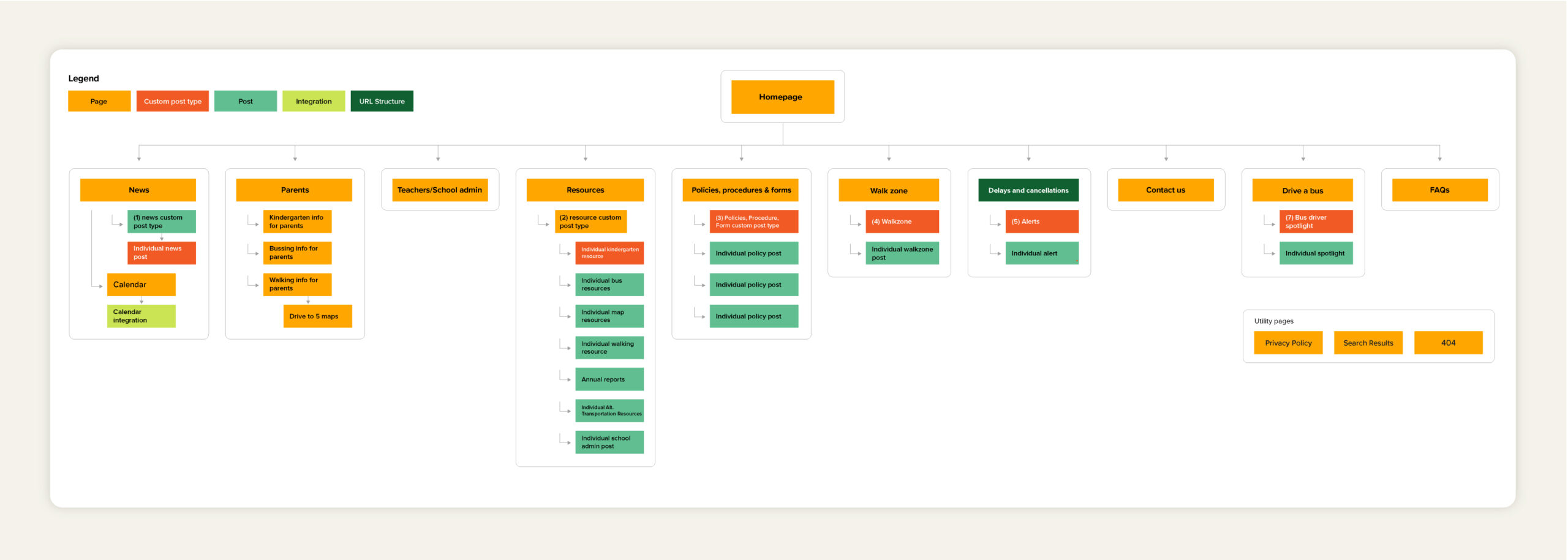
We started by tackling one of the biggest challenges in the old site: scale and complexity. The previous website had grown into a large collection of disconnected pages, resources, PDFs, and external links that were difficult to manage and even harder for users to navigate.
We restructured the entire site into a streamlined system built around approximately 10 core page templates. We did intensive taxonomy work and identified the need for custom post types to better organize and scale resources over time. We introduced a more intentional tagging and categorization system that would make the backend more manageable for the STSWR team and make it easier for users to filter and find information quickly.
We audited and reorganized all existing content, ensuring every resource was accounted for and properly categorized so it had a place within the new architecture. This included pages, news posts, policy documents, maps, and more.
We also accounted for one of the most important use cases on the site: urgent service updates such as bus cancellations and delays. These needed to be surfaced clearly and quickly, so we factored priority content and alert functionality into the overall architecture from the beginning.
Wireframing
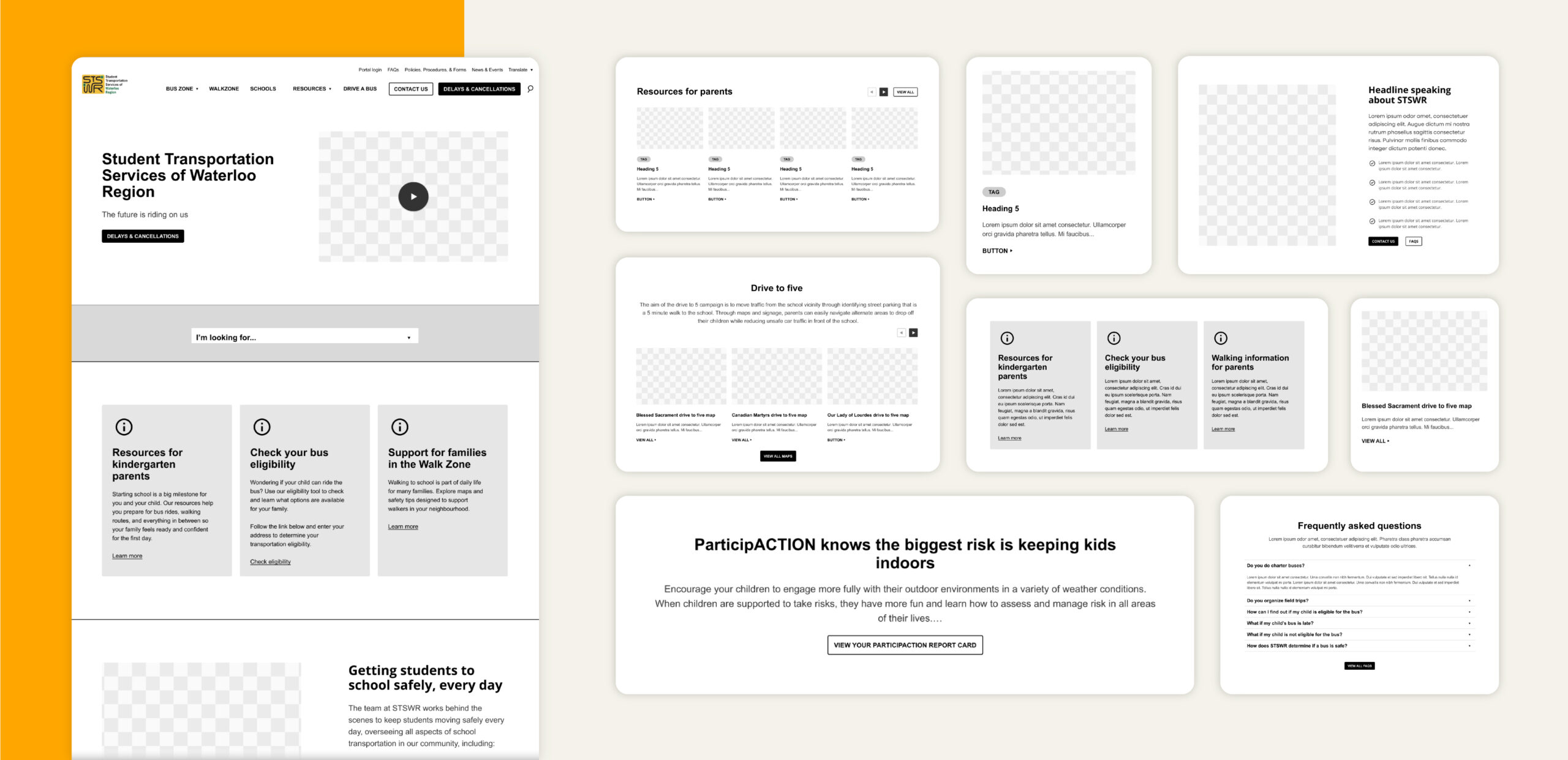
The goal was to design a modular system that could support STSWR’s wide range of content while keeping the experience simple for users.
We designed a flexible component-based framework that allowed information to be structured in a consistent and digestible way across the site. Rather than creating highly customized page layouts, we focused on reusable modules that could adapt to different types of content, from resources and policies to maps and service information.
A key consideration throughout this phase was how users interact with the site in real-world scenarios. Many visitors come with a specific, time-sensitive need, such as checking for bus delays or finding transportation details for their child. The wireframes prioritized scannability, clear hierarchy, and fast access to critical information, particularly on mobile.
Design
STSWR came to the project with a clear direction for the look and feel. They wanted a design that felt clean, simple, and approachable, while avoiding anything overly busy or overly stylized. The goal was to create a modern experience that supported usability first, while still reflecting their refreshed brand identity.
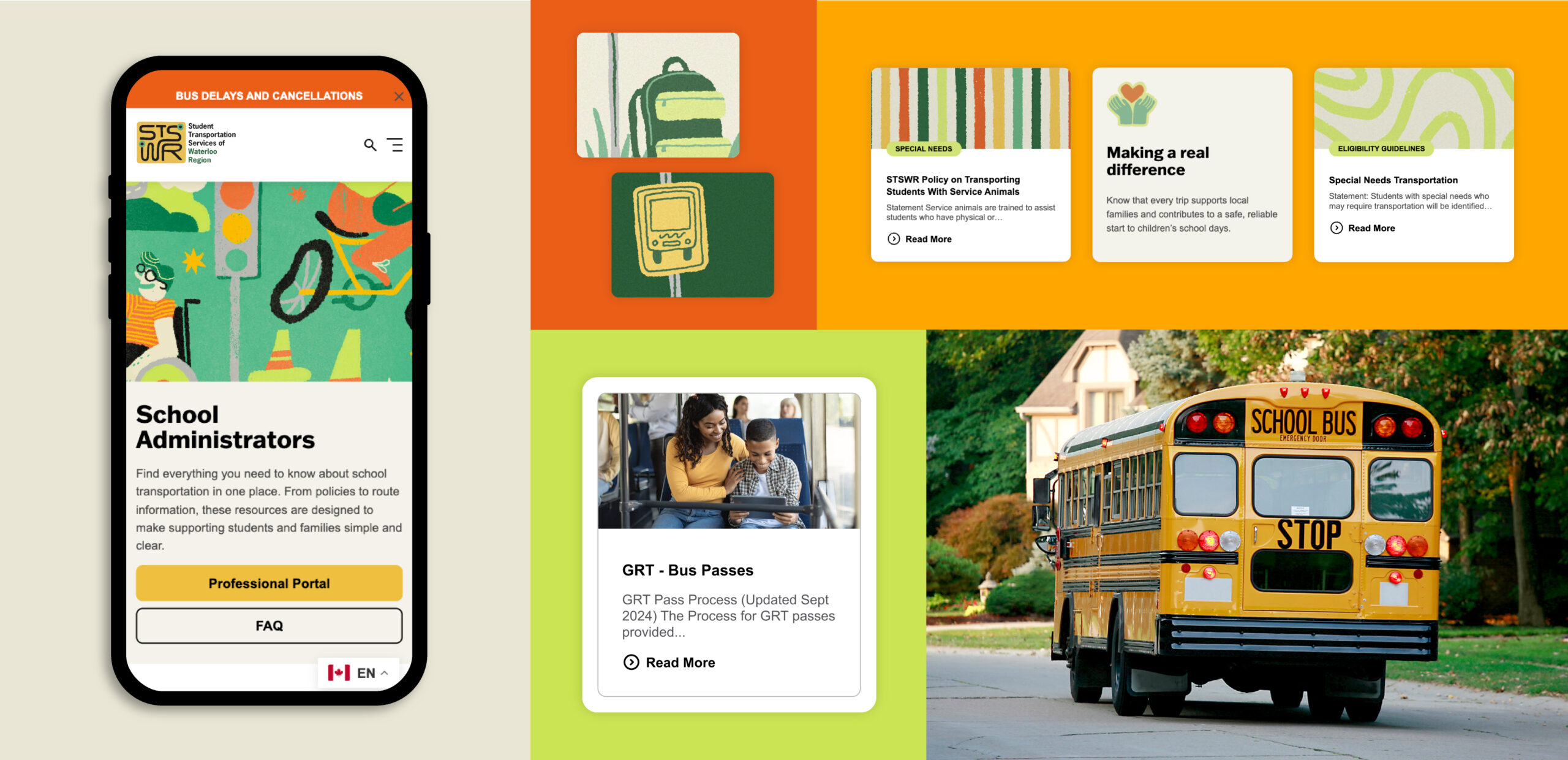
We translated that into a visual system that prioritized clarity and accessibility. The layout was kept light and structured, making it easy for users to scan content and find what they needed quickly.
While the previous website relied heavily on yellow and black, we used yellow more intentionally to highlight key actions and important information, balancing it with the other colours in STSWR’s palette to create a brighter, friendlier, and more welcoming experience. To add depth and warmth without overwhelming the interface, we used photography and illustration in a balanced way. Illustrations were especially important in reinforcing the updated brand and reducing reliance on stock imagery, while also helping break up more functional or text-heavy sections.
We also designed with scale in mind. Given the volume of resources and map-based content, we created reusable banner styles that could be applied across many sections, ensuring consistency while supporting a wide range of content types. Throughout, we made sure critical elements like service alerts and key navigation paths remained prominent, supporting users in moments where speed and clarity matter most.
“This was an exciting project to be part of because of its meaningful impact on our community. We leaned into their bright colour palette and incorporated vibrant illustrations to bring some energy and life to the brand. The final site has a great balance between clarity and creativity because of its intuitive navigation and engaging user experience.”
– Bethany Johnston-Baril, Graphic Designer at Stryve
Content Organization and Development
With development successfully underway, the next challenge was organizing and migrating a significant volume of content. STSWR’s website functions as a central information hub, housing everything from transportation resources and policies to maps, service updates, PDFs, and external links.
Stryve conducted a detailed content audit and worked through the existing site piece by piece. We reviewed, reorganized, and mapped content into the new structure, transforming a large collection of disconnected information into a more intuitive and searchable experience.
A major focus was improving how users discover information. We reformatted old content to fit the new modular page structures, creating a more consistent experience across the site.
Launch & training
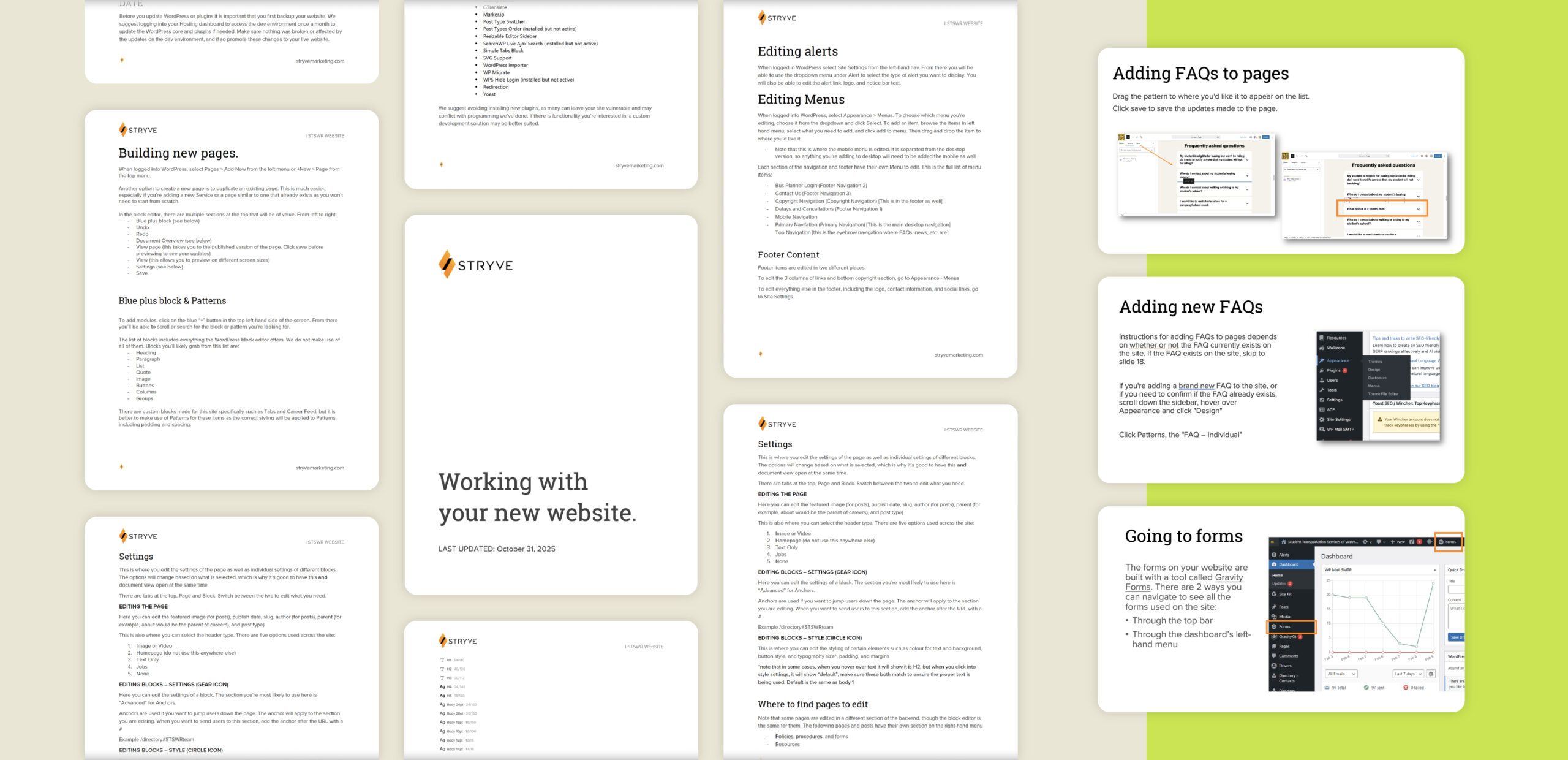
Once the site went through quality assurance, we launched and provided training to the STSWR team. The goal wasn’t just to deliver a new website, but to equip them with the knowledge and tools needed to confidently manage and grow it moving forward. This included several training sessions along with an in-depth hand-off document so they could manage their site independently, without leaning on agency support.
The impact
The new STSWR website now reflects the organization’s updated brand and is easier to navigate, easier to manage, and better aligned with how users actually search for information. Critical updates such as bus delays and cancellations are more visible, resources are easier to find, and the overall experience is more intuitive across both desktop and mobile devices.
Behind the scenes, STSWR now has a structured and scalable content management system that supports ongoing updates without the complexity of their previous site. The combination of a streamlined architecture, improved content organization, and a flexible WordPress build has positioned their team to maintain and expand the website more efficiently over time.
Most importantly, the website now provides a stronger digital experience for the parents, guardians, school staff, and community members who rely on it every day.